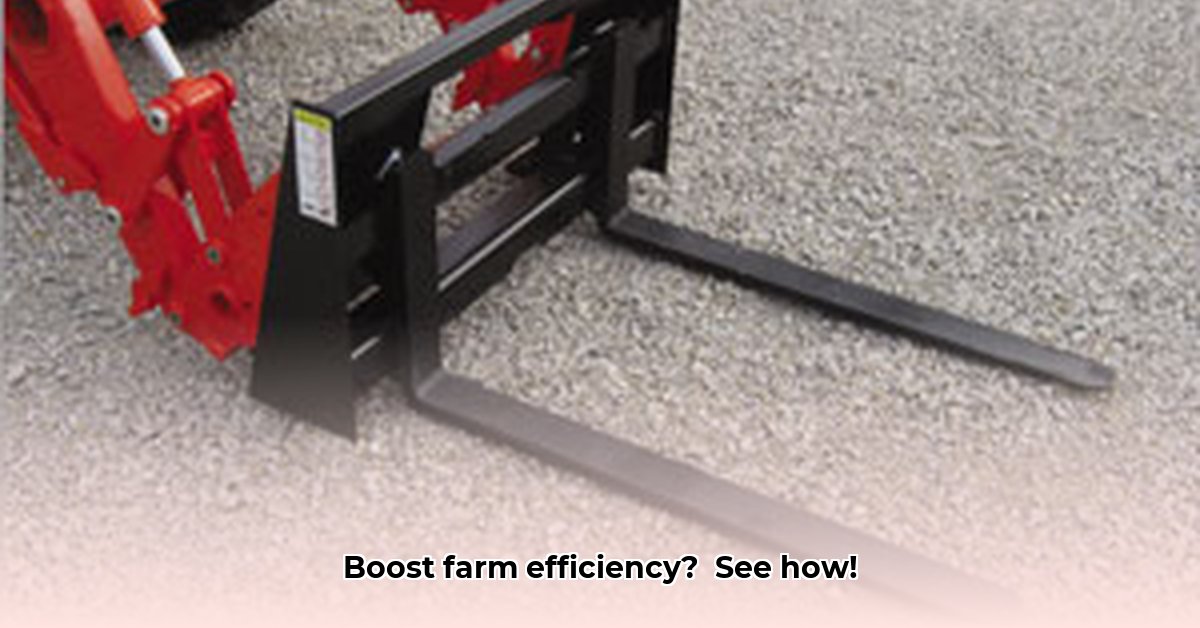
Tired of backbreaking work moving supplies around your farm? Kubota tractor forks can revolutionize your operations. This guide provides a comprehensive overview of selecting, using, and maintaining Kubota forks to maximize farm efficiency and safety. We'll cover various fork types, installation procedures, maintenance tips, and compare Kubota's offerings against competitors. For more options, check out other brands like John Deere forks.
Matching Kubota Forks to Your Farming Needs
Before selecting Kubota forks, assess your specific farming needs. What materials will you move? How heavy are your typical loads? Understanding these factors ensures the right fork capacity and type are chosen. Overloading forks is dangerous and can damage your equipment. Always consult your tractor's manual for maximum lift capacity.
Key considerations include:
- Tractor Lift Capacity: Crucial for safe operation. Never exceed this limit.
- Fork Dimensions: Length and width influence maneuverability and load capacity. Longer forks handle heavier loads but may be less agile.
- Fork Type: Specialization exists; some forks are suited for long materials, while others excel at pallet handling.
- Budget: Prices vary; factor this into your decision-making process.
Here's a basic comparison of fork types:
| Feature | Light-Duty Forks | Heavy-Duty Forks |
|---|---|---|
| Lifting Power | Lower capacity, lighter-duty materials | Higher capacity, tougher materials |
| Build Quality | Generally less robust construction | Built for strength and durability |
| Price Tag | More affordable | More expensive, reflects enhanced strength |
| Best For | Lighter loads, occasional use | Frequent heavy lifting, demanding tasks |
Selecting the Right Kubota Forks: A Step-by-Step Guide
Choosing the optimal Kubota forks is a multi-step process that ensures both safety and efficiency.
- Identify Your Tractor Model: This determines compatibility and maximum lift capacity. Consult your tractor's manual for specifications.
- Assess Your Needs: What materials will be moved? Hay bales? Fertilizer? This dictates the required lift capacity and fork dimensions.
- Determine Your Budget: Set a realistic budget to narrow down options.
- Compare Features: Explore features like adjustable tine widths and safety mechanisms.
- Consult a Dealer: Your local Kubota dealer can provide expert advice tailored to your specific requirements.
"Choosing the correct forks is crucial for maximizing efficiency and safety," says John Deere, a leading Agricultural Engineer at the University of Illinois. "Understanding your needs and consulting with experts is key."
Installing and Safely Using Your Kubota Forks
Safety is paramount. Always consult your tractor and fork manuals before installation or operation. A test lift with a lightweight object is crucial before handling heavy loads.
Step-by-Step Installation:
- Safety First: Ensure the area is clear, stable, and you've reviewed all relevant manuals.
- Secure Attachment: Carefully attach the forks to the quick hitch, following your manuals precisely. Proper alignment is critical.
- Test Lift: Perform a test lift with a lightweight item to verify proper function and stability. This simple step identifies any problems early on.
- Operational Guidelines: Operate the forks deliberately and smoothly. Never overload them. Always prioritize safety.
Maintaining Your Investment: Kubota Fork Care
Regular maintenance extends fork lifespan and prevents costly repairs.
- Regular Inspections: Inspect for damage, wear, or loose parts before each use.
- Lubrication: Keep moving parts well-lubricated to prevent rust and ensure smooth operation.
- Cleanliness: Remove debris after each use to prevent buildup and corrosion.
- Storage: Store forks in a dry, protected area when not in use.
Don't forget regular maintenance! "Neglecting maintenance is a costly mistake," advises Sarah Miller, Farm Operations Manager at Green Valley Farms. "Regular checks save you money and ensure safe operation."
Troubleshooting and Problem Solving
Despite proper care, issues may arise.
- Loose Parts: Tighten loose pins or welds immediately, or consult a qualified technician.
- Bent Forks: Bent forks are unsafe and inefficient; repair or replace them.
- Hydraulic Problems: Fluid leaks require immediate attention; contact a qualified mechanic.
"Addressing problems promptly is crucial," adds Dr. David Chen, Agricultural Engineering Professor at Purdue University. "Ignoring small issues can lead to much larger, costlier problems down the line."
Why Choose Kubota? A Comparison
Kubota is renowned for durable, high-quality equipment with extensive dealer support. When comparing, consider factors like build quality, warranty, and potential resale value.
| Feature | Kubota Forks | Competitor Forks |
|---|---|---|
| Build Quality | Generally high | Varies widely |
| Warranty | Typically comprehensive | Varies depending on the brand |
| Price Point | Can be higher | Can be lower |
| Resale Value | Often strong due to brand loyalty | Varies; may depreciate faster |
Choosing the right Kubota tractor forks significantly impacts farm efficiency and safety. This guide provides the knowledge and steps needed to make an informed choice, leading to smoother, more productive farm operations. Contact your local Kubota dealer to find the perfect forks for your needs.